Clearing a House: A Practical Guide to Probate and Full-Property Clearances
Clearing a whole house is less about lifting and more about sequence. Done in the right order, paperwork and valuables first, waste last, it is manageable. Done in the wrong order, things get thrown out that should not have been, and the job takes far longer than anyone expects. If the clearance follows a bereavement there is also a step to settle before anything leaves the property.
This guide covers that order of work, what to do with the contents, and the practical details that catch people out, including the large number of household items that cannot go in a skip.
If it is a probate clearance, start here
The contents of a house usually form part of the estate. That means nothing should be sold, given away or disposed of until the executor has authority to deal with the estate and the contents have been valued where a valuation is needed. It is worth checking three things before you start: whether a grant of probate is required, whether the will leaves particular items to particular people, and whether the property insurance still applies now the house is unoccupied, because many policies change once a property is empty.
This is general guidance rather than legal advice, so if there is any doubt about what can be removed and when, confirm it with the executor or the solicitor handling the estate before the first bag leaves the house.
A workable order of clearing
Working to a sequence stops you handling the same items three times.
Start with documents and valuables. Deeds, wills, financial paperwork, pensions, insurance documents, jewellery and photographs. These are the things that are hardest to replace and easiest to lose in a skip, so they come out first and go somewhere secure.
Then set aside anything sentimental. You do not have to decide about it now. A box in a separate room, labelled and left until later, saves a lot of second-guessing.
Next, items going to family. Agree these early rather than at the end, when everyone is tired and the van is already booked.
After that, sort what remains by destination: sell, donate, recycle, dispose. Furniture in good condition, working appliances, books, tools and unopened household goods are often wanted by charities and reuse schemes. What is genuinely beyond use becomes waste, and that is the last category to deal with, not the first.
Work room by room
Clearing by room rather than by category keeps progress visible, which matters on a job that can run over several days. Finish one room completely, including the cupboards and the loft space above it if there is one, before opening the next. Keep a staging area near the door for items leaving the house, and keep the keep-and-sentimental pile well away from it.
What you cannot put in a skip
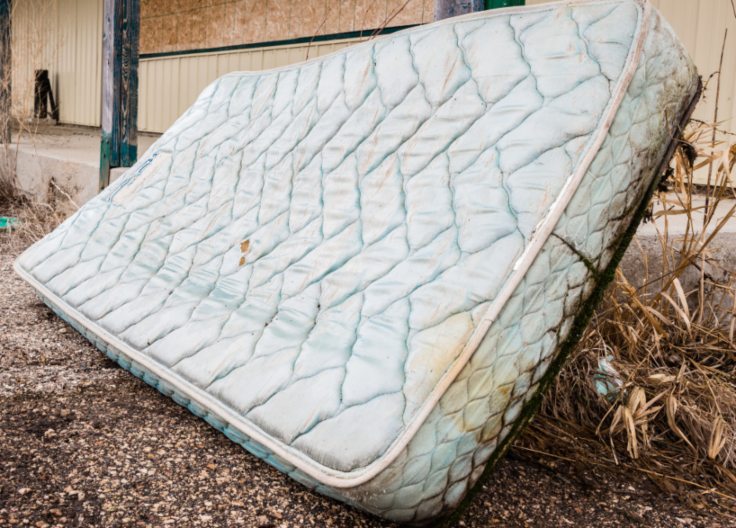
This is the part that surprises people on a house clearance, because a lot of ordinary household contents are restricted by waste regulations and cannot go in a general skip. That includes mattresses and upholstered furniture, fridges and freezers, carpets, paint, gas bottles, tyres, glass, fluorescent tubes and electrical items. In a full-property clearance that can easily account for a third of what you are moving.
Plan for those separately from the outset rather than discovering it on collection day, because a skip with restricted items in it cannot be collected until they are taken out. Our guide to what you can and cannot put in a skip has the full list.
How much waste to expect
A full house clearance usually needs an 8-yard skip or larger, and often more than one load once the restricted items are handled separately. The mix matters as much as the volume: bulky, light material such as furniture, bedding and packaging fills a skip quickly, while anything dense, like tiles, rubble from a small removal job, or a shed full of paving, reaches the weight limit long before the skip looks full. Our guide to skip sizes matches the sizes to the job.
Practical details worth sorting early
Check where a skip can stand. On the property’s own driveway is simplest, and you need room for the lorry to lower it and collect it later. If it has to go on the road, a council permit is needed, which Budget Waste arranges by prior arrangement, so flag it when you book rather than on the day.
Think about access inside the house too. Narrow stairs, a loft hatch and a garden gate all slow a clearance down, and they determine whether two people can manage or whether you need more hands.
Give it more time than you think
Most people underestimate a full-property clearance, particularly when it follows a bereavement and every drawer holds a decision as well as an object. Do the paperwork early while you are fresh, leave the sentimental sorting until last, and treat the heavy days as a job for several people rather than one. Working through it in that order tends to be quicker in the end, and considerably easier.