What Size Skip Do I Need? Skip Sizes by Project
The quickest way to pick a skip is to start from the job, not the yard rating. Most household clear-outs fit a 4-yard or 6-yard skip, a kitchen or bathroom refit a 3 or 4-yard, a full house clearance or renovation an 8-yard, and heavy garden or building waste a smaller skip than you would expect, because weight limits bite long before the skip looks full. This guide matches the common jobs to the right skip, then gives the full size reference and the two things that change the answer.
If you already know your size, you can check availability and pricing for your postcode.
What size skip do I need for my project?
Small household or garden clear-out
A 2-yard mini (roughly 20 to 30 bin bags) or a 4-yard midi (40 to 50) covers most. Use the mini for a shed or single room and the midi for a bigger declutter or light garden waste. Both fit on a typical driveway.
Kitchen or bathroom refit
A 3-yard or 4-yard midi is the usual choice. It takes old units, tiling and fittings, but keep dense rubble to the smaller end because of weight limits.
Full house clearance or renovation
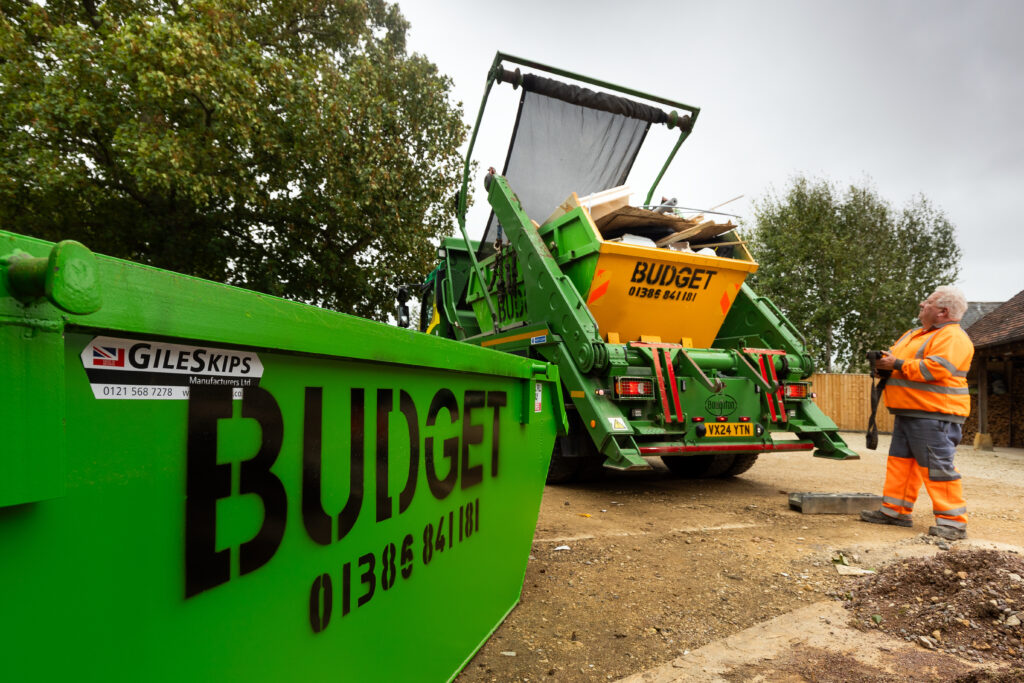
An 8-yard builders skip (around 60 to 80 bin bags) is the standard. It handles furniture, general waste and building materials from a whole-property job. For a large clearance of bulky but light items, a 12-yard holds more.
Building work, soil and rubble
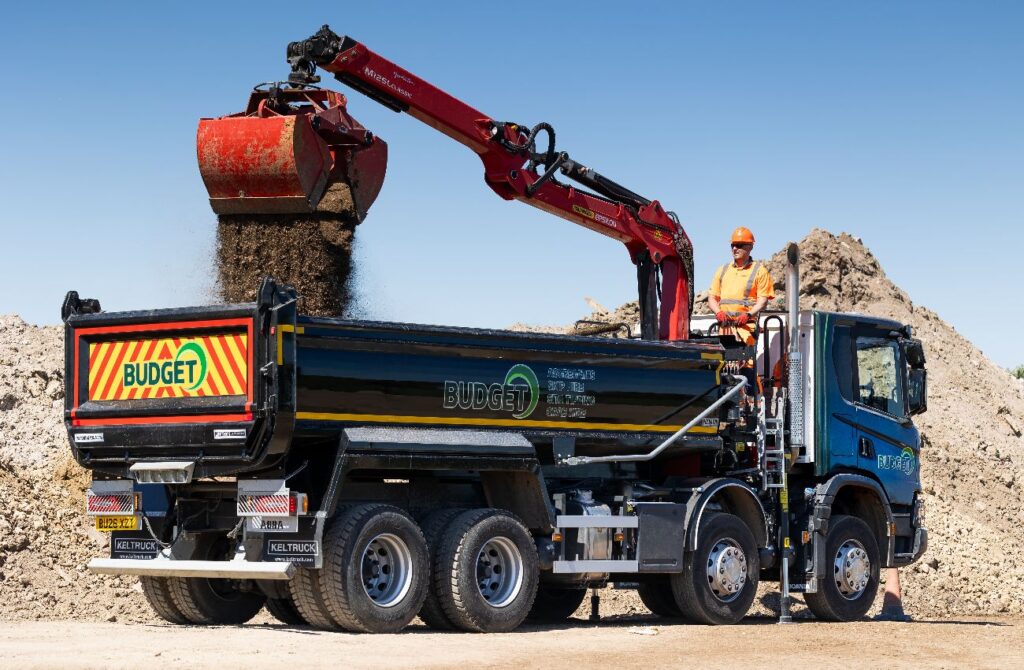
Go smaller than instinct says. Soil, hardcore and concrete are heavy, so a 4 or 6-yard skip often reaches its weight limit while still looking half empty. If you have a lot of heavy muck to move, grab hire is usually faster and cheaper than several skips.
Commercial or large-scale projects
For ongoing or high-volume waste, 12 and 16-yard skips suit bulky light waste, and 20 or 40-yard roll-on-roll-off skips are for industrial sites. See commercial skip hire.
Skip sizes at a glance
Every size Budget Waste offers, with dimensions and rough capacity. Skips are measured in cubic yards, which is the volume the skip holds, not its footprint.
| Skip | Dimensions (approx) | Holds (bin bags) | Best for |
|---|---|---|---|
| 2-yard mini | 5 x 3.5 x 2.5 ft | 20 to 30 | Small household and garden clear-outs |
| 3-yard midi | 6 x 4.3 x 2.5 ft | 30 to 40 | Kitchen and bathroom refits |
| 4-yard midi | 6 x 4.3 x 3.2 ft | 40 to 50 | Small renovations and garden clearances |
| 6-yard builders | 8.5 x 5 x 4 ft | 50 to 60 | Loft conversions and small construction |
| 8-yard builders | 12 x 5.5 x 4 ft | 60 to 80 | Full house clearances and large gardens |
| 12-yard | 12 x 5.5 x 5.5 ft | 100 to 120 | Major renovations and bulky light waste |
| 16-yard | 12 x 5.5 x 6.5 ft | 140 to 160 | Large-scale renovation projects |
| 20-yard roll-on-roll-off | 20 x 8 x 4 ft | 200 to 220 | Commercial and industrial sites |
Budget Waste also offers 40-yard roll-on-roll-off skips for the largest commercial and demolition projects.
Two things that change the answer
Waste type. Heavy, dense materials like soil, rubble and concrete reach a skip’s weight limit long before they fill it, so size down and expect it to look part-empty. Bulky but light waste, such as timber and packaging, fills the space fast but weighs little, so size up.
Where the skip will stand. On your own driveway you can have any size that fits, as long as the lorry can lower and later collect it. On a public road you need a council permit, which Budget Waste arranges for you by prior arrangement. When you are between two sizes, size up by one, because a second skip costs more than the next size would have.
What you cannot put in a skip
Some items are restricted by waste regulations and have to be handled separately, including asbestos, gas bottles, mattresses, paint, tyres and electrical items. Before you load, check the full list in our guide to what you can and cannot put in a skip, and keep waste level with the top, because an overloaded skip cannot be legally collected.
Availability by area
Skip options and pricing vary by location, because Budget Waste sets them by postcode zone, so what is available in one area may differ in another. The skip hire page lists availability by postcode, and anywhere outside the standard collection area is covered by the national service.
The bottom line
Start from the job, not the yard number. Most home clear-outs land on a 4 or 6-yard skip, renovations on an 8-yard, and heavy soil or rubble on a smaller skip than you would expect. When in doubt, size up by one.