

How to Dispose of Plasterboard (and Why It Can’t Go in a Skip)
Plasterboard cannot go in a general mixed skip. Because of its gypsum content it has to be kept separate from other waste, so it is disposed of on its own rather than thrown in with a standard load. This guide explains why, sets out the practical ways to get rid of plasterboard properly, and covers how Budget Waste can take it for you.
Why plasterboard can’t go in a skip
Plasterboard is made largely of gypsum. When gypsum breaks down alongside biodegradable waste in landfill, it can release hydrogen sulphide, a toxic gas with a strong smell. To prevent that, UK rules require plasterboard and other high-sulphate materials to be separated from general waste, so licensed operators keep it out of mixed skips and handle it on its own. That is why your skip provider will ask you not to put plasterboard in a standard skip, and why an otherwise full skip can be refused collection if there is plasterboard mixed in.
What counts as plasterboard
Plasterboard is more than full sheets. Offcuts from cutting boards to size, strips taken off stud walls and ceilings, and old boards removed during a renovation all count, and all need to stay out of your general skip. Boards that are painted or carry a thin skim of plaster are still plasterboard for disposal purposes.
Can plasterboard be recycled?
Yes. Kept clean and dry, plasterboard is recycled by separating the gypsum from the paper lining, with the recovered gypsum going back into making new board. That only works when it is not contaminated, which is the main reason it has to be collected separately rather than mixed into a general skip. Wet, painted or heavily contaminated board is harder to recycle and is more likely to end up as disposal than as recycling.
How to dispose of plasterboard properly
You have a few options, depending on how much you have.
Take it to a recycling centre. Many household waste recycling centres accept plasterboard, though quantities are often limited and some ask you to book a slot. Check your local council’s rules before you travel.
Reuse or donate offcuts. Clean, dry, usable sheets and large offcuts can sometimes be reused on other jobs or passed to community projects and reuse schemes.
Use a separate collection. For anything more than a sheet or two, the simplest route is a provider that collects plasterboard on its own and sends it to a licensed facility.
How Budget Waste handles plasterboard
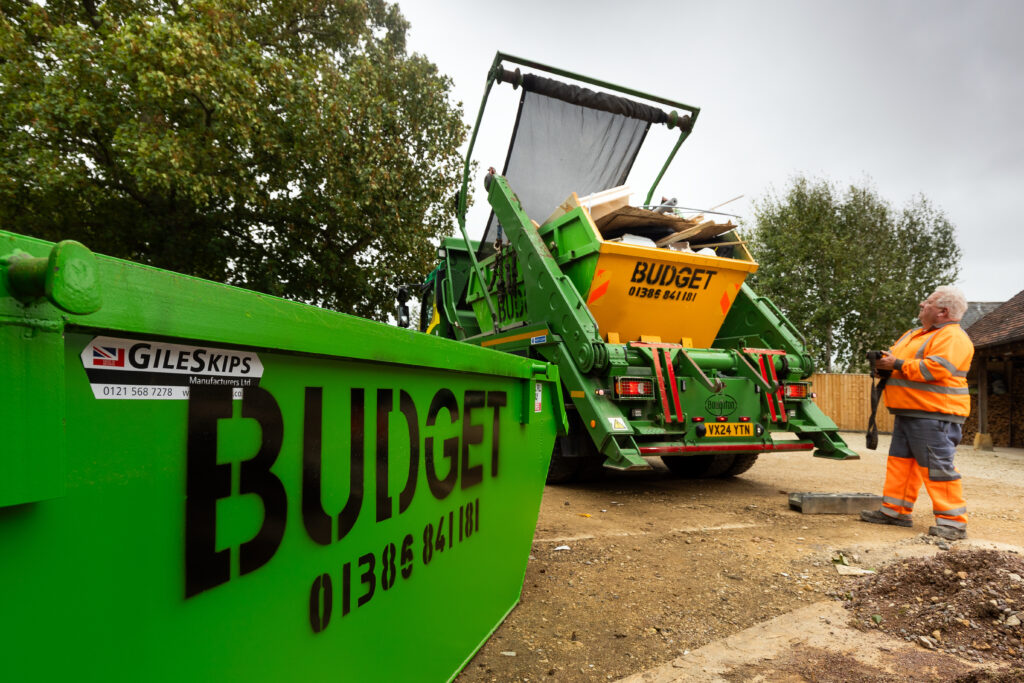
Budget Waste can collect and dispose of plasterboard through a collection service, kept separate from general waste and handled at a licensed facility. The key on your side is to keep it apart from the rest of your waste and to flag that you have plasterboard when you book, so it is collected correctly rather than turning up mixed into a general skip.
Common mistakes to avoid
Three mistakes cost people time and money. Tipping plasterboard into a general skip, which means the skip cannot be collected until it is removed. Letting it get rained on, which adds weight and rules out recycling. And mixing offcuts in with general renovation waste, so the whole load is contaminated. Bag or stack it separately as you go, and keep it under cover.






)